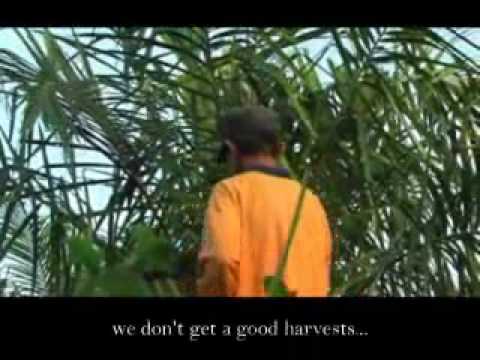
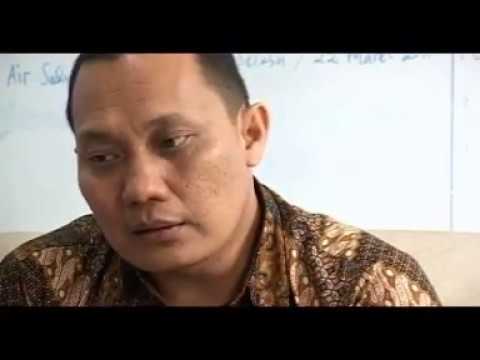
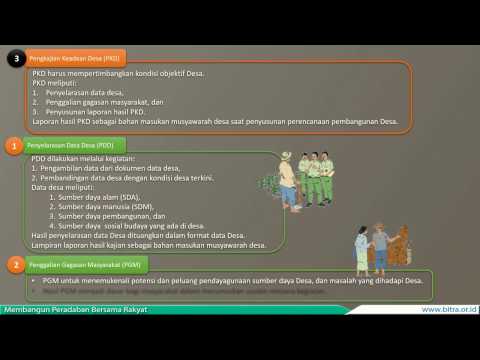
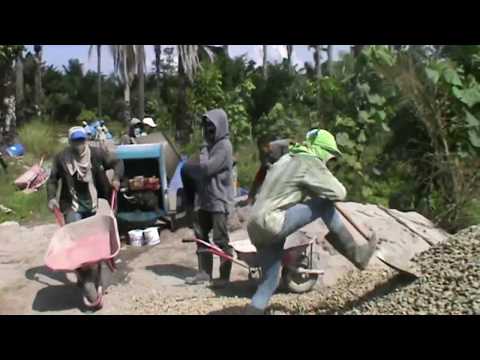
The Food Chat Discussion Series is a combination of online and offline (hybrid) organized by KRKP with BITRA Indonesia (6/10/2021).
Bogor (6/10) – The People’s Coalition for Food Sovereignty (KRKP) together with the BITRA Indonesia Foundation held a public discussion entitled “The Relevance of Investment in Agriculture and Food in a Pandemic Period: Macro or Micro?”. This activity is part of a series of food talks with the theme of reforming the food system in Indonesia.
The Covid-19 pandemic in Indonesia has had a significant impact on the food system in Indonesia, including farmers. The pandemic has made the situation of farmers, especially small-scale farmers, worse off along with the moment of scarcity of subsidized fertilizers.
Jumino, an organic farmer from Serdang Bedagai, North Sumatra, stated that such a situation should be an opportunity to encourage farmers to farm independently by utilizing the available natural resources around them. However Jumino said that the government did not see this opportunity. According to him, the government needs to spread independent farming practices that optimize narrow land and yards to meet the food needs of farmers. In addition, the government is also expected to facilitate farmers in expanding the market reach of farmers’ products.
“In the midst of a slumping condition of small farmers, the Government has not paid attention and efforts in the countryside to address food needs during the pandemic. The government needs to socialize food fulfillment initiatives at the family level through independent activities. In addition, for business sustainability, there needs to be facilitation from the government to increase market reach,” said Jumino.
Meanwhile, Risma, Department of Agriculture, Food Crops and Horticulture, North Sumatra Province, said that there was a refocusing of the budget, which only focused on strategic commodities that contributed to inflation. This also causes changes in performance targets.
“This pandemic has changed performance targets, the budget is focused on helping farmers during the Covid-19 pandemic. Commodities that are the focus of increasing production are lowland and upland rice, chili, soybeans, fruits, ginger, turmeric,” said Risma.
In this activity which was attended by 56 people, Dr. Ir. Tavi Supriana, MS, Dean of the Faculty of Agriculture, University of North Sumatra, said that micro and macro policies must work together to improve the performance of the agricultural sector. Tavi gave an example when a micro policy, namely increasing production, is encouraged but a macro policy in determining prices is not economically profitable, then it will harm farmers.
“Micro and macro policies must have synergy to improve the performance of the agricultural sector. Otherwise, the goal will be impossible to achieve. For example, micro policies are encouraged to increase production, but macro policies in determining prices are not economically profitable. This can be detrimental to farmers,” said Tavi.
Within the framework of public investment, it is expected to increase the insight and skills of farmers as the center of attention. Farmers are grown in their creativity and capacity so that they can be more resilient during the pandemic, said Berliana, Manager of ComDev BITRA Indonesia Foundation.
“This investment is how to improve the insight and skills of farmers as the center of attention. Farmers are supported by their creativity and capacity so that they can be more resilient, especially during the pandemic. When farmers are the center of attention what happens is that the production of soil quality, food reserves, and income increases by itself.” Said Berlian.
He also suggested that permaculture could also be a micro-investment that could be encouraged at the farmer level in North Sumatra.
Said Abdullah, National Coordinator of KRKP, said that the government is currently more focused on public investment in the form of infrastructure. He said that public investment in physical infrastructure is predicted to increase income, but it does not necessarily reduce income inequality.
“The government, especially the era of President Jokowi, has focused on public investment in physical infrastructure. But is it a significant impact? For example, the increase in public investment in subsidized fertilizers rose to 1452% (accumulated increase from 2004 to 2014) but the increase in productivity tends to stagnate at only 13%. This is indeed predicted to increase income but does not necessarily reduce income inequality.” Said Said.
Said also said that public investment in infrastructure should also be accompanied by a budget for research and development, technology, skills, counseling, and improving market support mechanisms to increase farmers’ income. The research results of KRKP and FEM IPB revealed that the public investment scheme in the above fields could significantly increase the GRDP in Indonesia, including the Province of North Sumatra.
“Public investment in infrastructure is indeed important, but the impact will not be too significant if it is not accompanied by investments in research and development, technology, skills, counseling, empowerment and improvement of market support mechanisms to increase farmers’ income. Our research shows that public investment schemes in these fields can increase the GRDP in Indonesia, including the Province of North Sumatra.” Said Said In closing, Said said that public investment in the agricultural sector should answer holistic problems and not be trapped only in physical infrastructure. In addition, in developing public investment policies, it is necessary to strengthen accountability and space for public participation. He also revealed that it is important to increase the control room of the community and other stakeholders to increase effectiveness in public investment. (WRN)
Source: https://kedaulatangangan.org/relevansi-investasi-di-dunia-pertanian-dan-pangan-di-masa-pandemi-makro-atau-mikro/


 BITRA Indonesia, Bina Keterampilan Pedesaan Indonesia

 Gending Jawa di tanah Sumatera