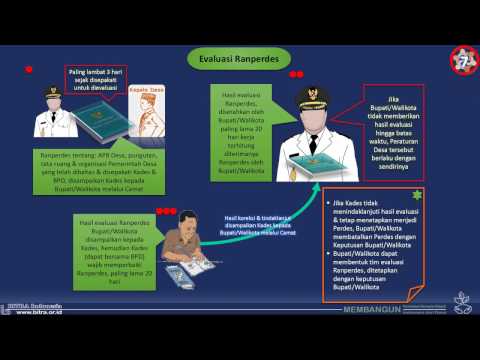
By : Teguh Yuwono
Lecturer of the Faculty of Forestry UGM
The social forestry program is actually aimed at improving the welfare of rural communities. The Center for Rural and Regional Studies at Gadjah Mada University (2016) estimates that 48.8 million Indonesians live in forest areas and 10.2 million of them (21.1 percent) are classified as poor.
However, until now, the Ministry of Environment and Forestry and the Ministry of Agrarian Affairs and Spatial Planning have only provided permits for social forestry. There are still many groups of permit recipients who have not received the government’s attention through productive economic empowerment programs. In the context of the integration of social forestry programs with village development, there are still many permit recipients who have not yet received recognition and are involved in village development planning.
One reason is that most village governments do not include state forest areas in village planning. The village government assumes that the state forest area is not an area under the authority of the village government, even though it is de facto a village administrative area.
In 2017, the government actually formed the Agrarian Reform and Social Forestry Team under the control of the Coordinating Minister for the Economy. The team consisted of the Working Group on Forest Area Release and Social Forestry, chaired by the Minister of Forestry, the Working Group for Legalization and Land Redistribution for Agrarian Reform Objects (TORA), chaired by the Minister of Agrarian Affairs, and the Working Group for Community Economic Empowerment, chaired by the Minister of Villages.
However, until now there has been no real evidence of community empowerment for social forestry managers carried out by the Ministry of Villages. Some groups that are considered successful are generally the result of their hard work, innovation, and creativity with the support of non-governmental organizations, not the result of empowering the Ministry of Forestry and the Ministry of Villages.
Empowerment can actually be done with village funds. Since it was rolled out in 2015, village funds have continued to increase. If in 2015 the amount was only IDR 20.67 trillion or IDR 280.3 million per village, in 2017 and 2018 it was IDR 60 trillion or IDR 800.4 million per village. This year the funds increased again to Rp 70 trillion.
However, until now, village funds have been mostly used for infrastructure development, such as roads, reservoirs, and irrigation, while funds for community economic empowerment have received less attention. Therefore, this year, President Joko Widodo emphasized that the allocation of village funds is no longer used only for village infrastructure development, but can be used to support village innovation programs and human resource development.
In an effort to integrate social forestry with village development, village funds should be allocated taking into account the priority of use in accordance with regulations. In the provisions of Article 21 paragraphs 1 and 2 of the Regulation of the Minister of Finance Number 49/PMK.7/2016 concerning Procedures for Allocation, Distribution, Use, Monitoring, and Evaluation of Village Funds, it is explained that “the use of village funds is prioritized to finance development and community empowerment”.
The Ministry of Villages then issued a Regulation of the Minister of Villages which outlined in more detail the utilization priorities. For example, in the Minister of Village Regulation Number 16 of 2018, it is specifically stated that village funds can be used for economic empowerment activities for communities receiving social forestry permits. The priority activities that can be financed from the village funds include a) Management of agricultural business production for food security and agricultural businesses focused on the establishment and development of superior village products or superior products of rural areas, such as village forest business management; b) Development of village-owned enterprises that are focused on the establishment and development of superior village products or superior products of rural areas, such as village forest management.
However, the use of village funds for economic empowerment of social forestry programs still faces many technical obstacles. For example, the village government’s limited understanding of the allocation of social forestry funding. The solution is to provide legal certainty that social forestry is one of the priorities for community empowerment that can be funded by village funds. In addition, regional policy makers, particularly regents/mayors, issue legal signs and legal umbrellas in the form of regent/mayor regulations or similar regulations as a basis for village heads in allocating part of village funds for economic empowerment in social forestry areas.
Source: https://kolom.tempo.co/read/1227871/integration-dana-desa-dan-perhutanan-social/full?view=ok


 BITRA Indonesia, Bina Keterampilan Pedesaan Indonesia



 Gending Jawa di tanah Sumatera