bitraorid | 27.03.2021 | Deli Serdang

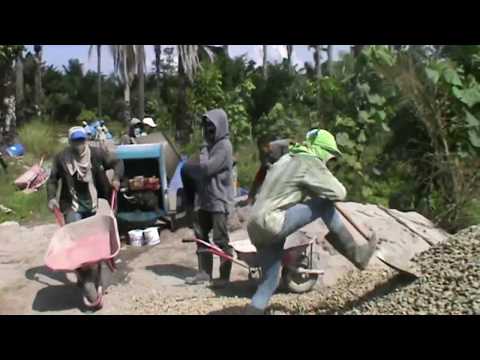
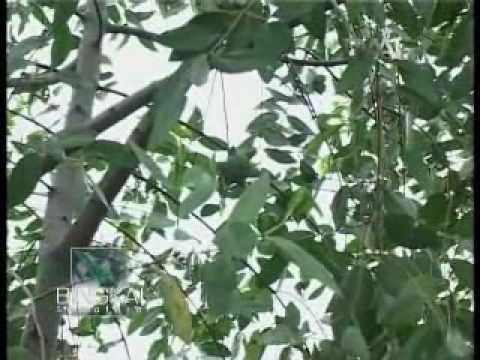
A farmer group in Telaga Jernih village, Secanggang, Langkat is processing mindi leaves as a mixture for making plant-based pesticides.
Despite producing food as the most important element of intake for human life, conventional agriculture contributes quite a lot to global warming, according to the Food and Agriculture Organization (FAO) of the United Nations food and agriculture agency (UN), agriculture and management activities. The land accounts for 20.4% of greenhouse gas (GHG) emissions, in the first place is electricity and other heat sources (25%), while below agriculture there are industrial activities (17.9%), followed by transportation (14%) ), then other energy, food waste, buildings and others.
So conventional agriculture, apart from damaging the environment, also contributes greatly (2nd order) to global warming. Therefore, recently an alternative concept emerged, polyculture/forestry/intercropping or other designations, polyculture is an agricultural concept that embraces various types of plants as a correction of the monoculture model of agriculture (like plants in a wide area) and polyculture is considered very environmentally friendly agriculture. However, this concept is corrected again with the latest agricultural concepts and practices, namely permaculture farming. Permaculture is an absorption word adapted from English, namely permaculture, as an abbreviation of permanent agriculture. That is, agriculture with a sustainable, continuous, and permanent life order. Therefore, permaculture adheres to the principle of balance and sustainability. Permaculture agriculture began to be studied by BITRA Indonesia about 3 years ago from the main institution for permaculture development in Indonesia, namely the IDEP Foundation in Bali. Now BITRA permaculture is on assisted bases in rural areas. Like the activities carried out in Sukamandi Hulu village, Pagar Merbau, Deli Serdang, yesterday, Saturday 27 March 2021. BITRA Together with the assisted farmer groups made a biogas construction pit and organic fish feed, “the production of fish feed is done because in this village many farmers raise fish in ponds, irrigation canals in front of houses and rice fields, with the intention that farmers integrate their agriculture with nature and can take advantage of the wastes of life around them, produce healthy fish for nutritional intake for the farming family and for the consumption of others in general, if the fish produced is surplus to the needs of the family farmer.” That is the long explanation of Berliana Siregar, Community Development Program Manager (ComDev) BITRA Indonesia on bitra.or.id.

Organic fertilizer is made from the main raw material of livestock manure from the villagers of Telaga Jernih, Secanggang, Langkat.
“Permaculture farming activities are not only very good for the environment, in harmony with nature, economically it will also increase farmers’ income and most importantly reduce the dependence of farming families on fish intake contaminated with chemical residues from outside markets.” added Berlian. Permaculture has a similar concept to the concept of integrated agriculture and organic farming, but permaculture emphasizes design, agricultural planning and its integration with implementation in the form of agricultural practices. Permaculture departs from the thinking of Bill Mollison & David Holmgren (1978) who launched the idea, “work with nature, not against it”. Humans act as designers for their own lives and have responsibility for their future and the earth. The main principle is to be responsible for the existence of humans and their descendants, including maintaining the sustainability of puspa, animals, and other living things. The ethical basis of Permaculture is (1) Caring for the earth: how we provide all living systems (living and dead elements) to be sustainable and growing, (2) Caring for humans: how we expand access to resources needed for human survival, and (3) Setting consumption and population limits: how we regulate how much we need ourselves, so that we can set aside resources for the future. “What we take, we must return”, and “nature needs a return from what has been received by humans”, Mollison’s principle has become a code of ethics in permaculture, so that in its application it must have an ecological design that can build a system of energy utilization, both energy that is in and out efficiently. As an empowering institution for rural communities, in order to achieve rural development in agriculture, last week BITRA Indonesia carried out learning and practice of making organic intakes for permaculture farming, making liquid organic fertilizers, solid organic fertilizers and vegetable pesticides by utilizing abundant natural local resources. in the village, such as livestock manure and mindi leaves. “This model is the most appropriate design and practice in the midst of agricultural farming that currently uses nutrients that damage the earth, health and future.” said Sudarmanto, ComDev field staff, BITRA. In a separate place, the Advocacy Syaf of the BITRA Indonesia Foundation, Quadi Azam stated, “not only do we learn the technicalities of permaculture farming with farmers, we also learn and discuss substance, analyze major problems that occur and are faced by farmers. From small practices in the field, together we try to conclude that these techniques have a big enough impact to encourage farmers’ sovereignty. This field technique is closely related to improving the economy of farmers, maintaining the ecology, health and sovereignty of the farmers themselves.” “Meanwhile, the ecological design process to realize permaculture can be applied through the methods and steps of SADAR (Survey, Analysis, Design, and Plan) and TREO (Apply, Treat, Evaluate, and Operate).” Azam continued, explaining the ways and steps of permaculture farming. (isw)


 BITRA Indonesia, Bina Keterampilan Pedesaan Indonesia




 Gending Jawa di tanah Sumatera