Jakarta, February 24, 2022 – A joint study by FIAN Indonesia, KSPPM, BITRA Indonesia, PETRASA and KPA North Sumatra was released on Wednesday, February 23, 2022 in a webinar, Exploring Commitments to the Right to Food and Nutrition and Human Rights in the Food Estate project in North Sumatra.
This webinar presented four speakers, namely Fuad Abdulgani, Gusti Nur Asla Shabia, Prof. Posman Sibuea, and Kartini Samon. Also present as a response to this report from Komnas HAM, Sandrayati Moniaga; from the Ombudsman of the Republic of Indonesia, Miftah Firdaus; and from AMAN Tano Batak, Roganda Simanjuntak.
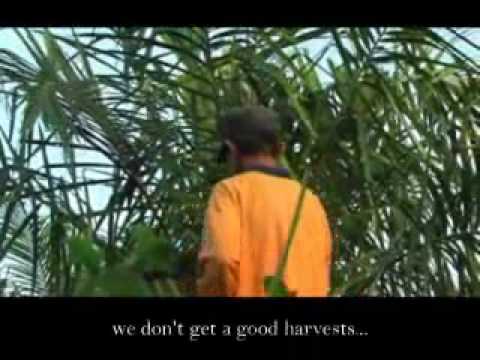
During the meeting, Fuad Abdulgani, Research Coordinator for Food Estate Research in North Sumatra, revealed that a field study in Riaria village found that there was a seizure of control over the management of land rights from farmers to agribusiness corporations through contract farming, as well as efforts to integrate farmers with global chains. Not only that, in the second planting season, the cooperation scheme between companies and farmers showed unequal power relations between the two. “This further exacerbates Food Estate policies that ignore local-specific realities and the food security basis of farmer households.”
Adding to the explanation above, Gusti Nur Asla Shabia, Research and Advocacy Staff of FIAN Indonesia said that there is potential for maladministration and violations of the right to food and nutrition in the Food Estate. “The lack of participation, the balance of rights and obligations between farmers and companies in contractual relations, as well as accountability and transparency in the planning and implementation of the Food Estate show this potential. Meanwhile, there are indications that the state violates the right to food by implementing a Food Estate that does not respect agricultural culture that has lasted for years and does not protect farmers from third parties, in this case corporations.”
Prof. Posman Sibuea, Professor of UNIKA Santo Thomas said that “This Food Estate Program is top-down, does not accommodate the aspirations of the local community or local government.” According to him, the government should choose commodities that are in accordance with the national food security program, namely reducing rice consumption and increasing consumption of fish and vegetables to prevent stunting. Unfortunately, he saw, “The current commodity is for industrial needs.”
Kartini Samon from GRAIN said that the development of the Food Estate was not in the interest of national food. “While we saw the initial goal was to tackle hunger and food shortages due to the pandemic, but the Food Estate’s own target in the end was to penetrate the international market. Again, we see farmers being given the responsibility to feed the world, but forgetting that those who live in areas where food production takes place lose their sources of food and livelihoods,” he concluded.
Responding to the four speakers, Sandrayati Moniaga from Komnas HAM noted that the government has not prioritized development needs based on food sovereignty, ecological sustainability, and guarantees from dependence and vulnerability to fluctuations in plantation commodity prices. According to him, “The state must support the need for public information disclosure, must be fully transparent and involve the community.”
Miftah Firdaus from the Indonesian Ombudsman emphasized that when there are material and immaterial losses in the implementation of the Food Estate project, especially for farmers, there is the potential for maladministration. The Ombudsman’s own findings include allegations of maladministration even from the planning stage, ranging from the absence of a thorough study and land acquisition issues, to the neglect of local culture and lack of guidance regarding the introduction of new commodities.
Roganda Simanjuntak from AMAN Tano Batak said, “Indigenous peoples face multi-layered problems with their not being recognized as indigenous peoples and the repeated seizure of customary territories through state forest claims, concessions, tourism development, and now one of them is the Food Estate program.” Furthermore, Roganda requested that this program be stopped before the land rights of indigenous peoples are fulfilled. “Because it is very likely that when a forest area is turned into a food estate area, a new disaster will arise; such as landslides and droughts because the frankincense forest is the best forest in the Lake Toba area.”
Therefore, we FIAN Indonesia, KSPPM, BITRA Indonesia, PETRASA, and KPA Sumut urge the Government of Indonesia, both central and local governments to:
Respect human rights and promote the progressive realization of the right to food and nutrition by taking seriously the findings of indications of HAPG violations and maladministration from the results of research and investigations that have been carried out on the implementation of the Food Estate in North Sumatra.
Assess and evaluate the implementation, achievements, and impacts of the Food Estate project by ensuring the independent participation of farmers and affected communities, experts and the public.
Stop cooperation that is detrimental to small-scale farmers, indigenous peoples, women and other agricultural workers, as well as those that damage the environment in the Food Estate, especially related to the seizure of control by corporations.
Optimally allocate government resources to support agricultural development. (Isw)


 BITRA Indonesia, Bina Keterampilan Pedesaan Indonesia







 Gending Jawa di tanah Sumatera